- Joined
- 27 August 2018
- Messages
- 71,380
- Reactions Received
- 151,388
- Cards
- View Profile
- KS Coins
- 129,595
- Fandom
- Lex stan
- Gender
- Female
- Pronouns
- she/her
- Ship
- Wreck

![Super M [Ahsoka]](https://kpopsource.com/data/medal/1218_1600222072m.jpg)
![Rose Competition [Vikki]](https://kpopsource.com/data/medal/581_1610996728m.jpg)
![SHINee [Ahsoka]](https://kpopsource.com/data/medal/2238_1710820634m.jpg)
![STAR WARS EVENT [VIKKI]](https://kpopsource.com/data/medal/1166_1610996719m.jpg)


There are actually a few theories, all of which date back to the Spanish peso in 1700’s. I’ll cover the most well founded theories below, as well as an explanation of what the Spanish peso had to do with the symbol.
The US Coinage Act of 1792 valued the US dollar as "the value of a Spanish milled dollar as the same is now current". This meant that the US dollar would have the same value as a Spanish silver dollar, which was the most commonly circulated coin in the US at the time. The Spanish dollar remained legal currency in the US until 1857.
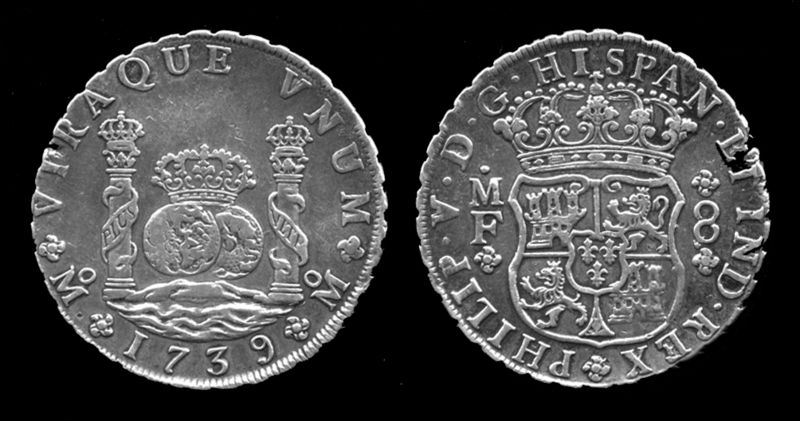
One theory dates back to designs on Spanish currency, specifically the pillars of Hercules. Spanish currency often had the pillars of Hercules on the royal design, with ribbons wrapped around the pillar. This looks kind of like a dollar sign, especially on coin designs like the one below. An additional argument for this is that in Qing era China (mid 1600s to early 1900s), the Spanish dollar was called “double pillar”.
Another theory is that it comes from the way scribes wrote peso, which was often P with a little s (in the image below). Over time, people started to write the s over the P, which resembled a dollar sign.

And the last theory is that it came to Spain from Germany, using a coin called a Joachimsthaler. An S and either I or J could be used to denote this coin, and a was even used on at least one occasion, resembling a dollar sign.

The US Coinage Act of 1792 valued the US dollar as "the value of a Spanish milled dollar as the same is now current". This meant that the US dollar would have the same value as a Spanish silver dollar, which was the most commonly circulated coin in the US at the time. The Spanish dollar remained legal currency in the US until 1857.
One theory dates back to designs on Spanish currency, specifically the pillars of Hercules. Spanish currency often had the pillars of Hercules on the royal design, with ribbons wrapped around the pillar. This looks kind of like a dollar sign, especially on coin designs like the one below. An additional argument for this is that in Qing era China (mid 1600s to early 1900s), the Spanish dollar was called “double pillar”.
Another theory is that it comes from the way scribes wrote peso, which was often P with a little s (in the image below). Over time, people started to write the s over the P, which resembled a dollar sign.
And the last theory is that it came to Spain from Germany, using a coin called a Joachimsthaler. An S and either I or J could be used to denote this coin, and a was even used on at least one occasion, resembling a dollar sign.