
- Joined
- 5 November 2018
- Messages
- 23,131
- Reactions Received
- 38,822
- Cards
- View Profile
- KS Coins
- 19,398
- Fandom
- Answer is Queen
- Gender
- Female
- Pronouns
- She/Her
- Ship


I’m in the chicken mood okay 
I wanted to share a few fun (and some not fun) facts about these animals.
1.
Chickens are omnivores, they eat plants, seeds, small animals and in some unfortunate cases they’ll take part in cannibalism. We’ve only dealt with cannibalism with one hen before in the past, she would constantly eat any eggs laid. It usually starts by accident, a chicken accidentally breaks the shell and because they’re naturally curious they check it out and sometimes when they taste it once they continuously do it. Cannibalism can also happen after a member of the flock is injured and has an opened wound, other members will peck and at times continue to peck until they’ve killed the other chicken. It’s why you need to separate injured chickens from the main flock.
2.
They can eat a lot of seasonings you use in your cooking. A lot is extremely beneficial, some herbs act as a natural dewormer, sprinkle certain herbs in the coop it helps keeps it pest free and relaxes your chickens, some herbs help with inflammatory issues, sinus issues and so on. They can even eat red pepper flakes, it helps with worms and helps fight bacteria.
3.
They love their baths (dust baths of course) and its one of the cutest things

Dust baths are a sign of happy chickens, it looks messy but it actually helps keep them parasite free. You should never give a chicken a real bath (water bath) unless they happen to roll in something dangerous, or have a very poopy booty which is always fun. And if you do give them a bath they need to be dried and in a warm area until completely dry.
4.
The pecking order is always interesting to me, in every flock you’ll always have one “head chicken” she or he will put the others in their place with some quick pecks and maybe chasing them away from a treat. In our flock its our second oldest hen and when she puts the others in their place it’s actually very gentle, I’ve never seen her be aggressive while doing it. You’ll then have some that are in the middle and those chickens can usually be more relaxed than others because they just have a comfortable place in the chicken hierarchy, its the ones at the bottom that are more alert. Our two that are at the bottom of the pecking order is Velvet and Millie, they don’t necessarily get bullied but it just means they’ll get last pickings when it comes to treats and will just be pecked more than the others.
5.
Did you know that there’s a 4ft chicken breed?
It’s called Indio Gigante. Roosters can reach almost 4 ft tall and hens are typically close to 3ft.

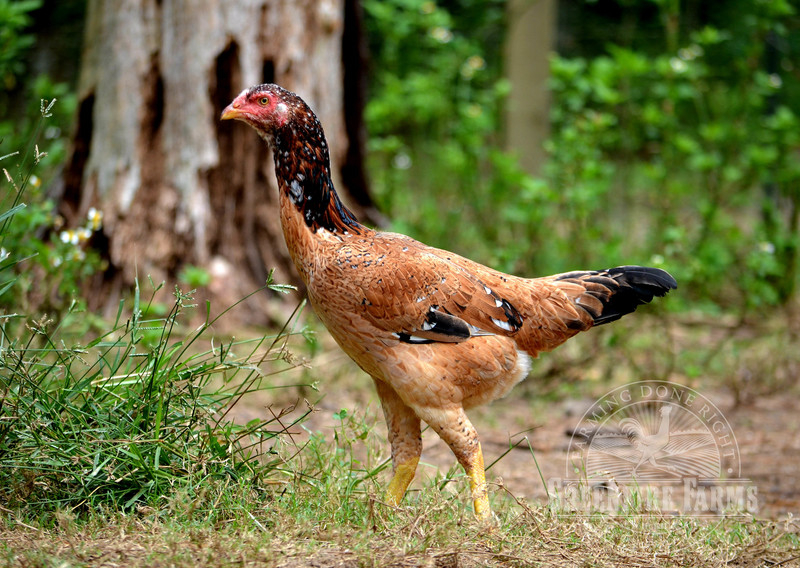
I think they’re a little creepy lookin’ ngl Idk if I would ever want one, at least not a rooster because I wouldn’t want to risk a mean 4ft chicken. Our current roosters already cause enough trouble I can’t imagine the struggle with a mean one of these.
6.
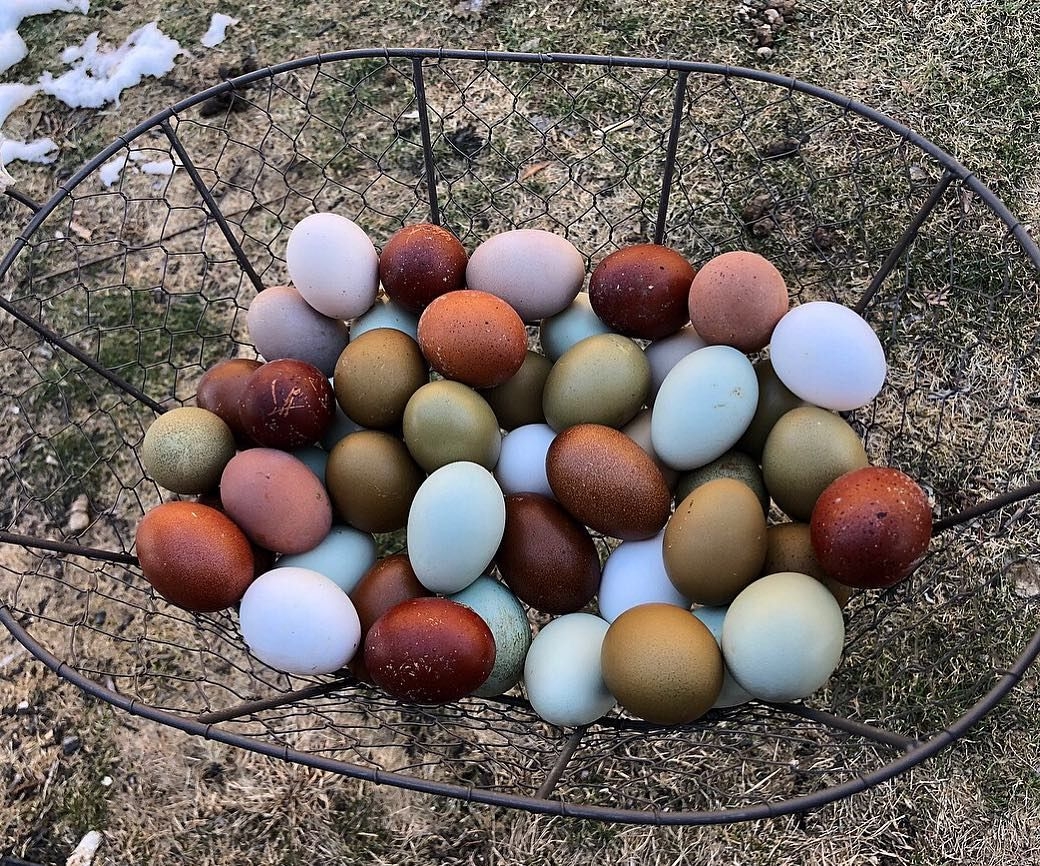
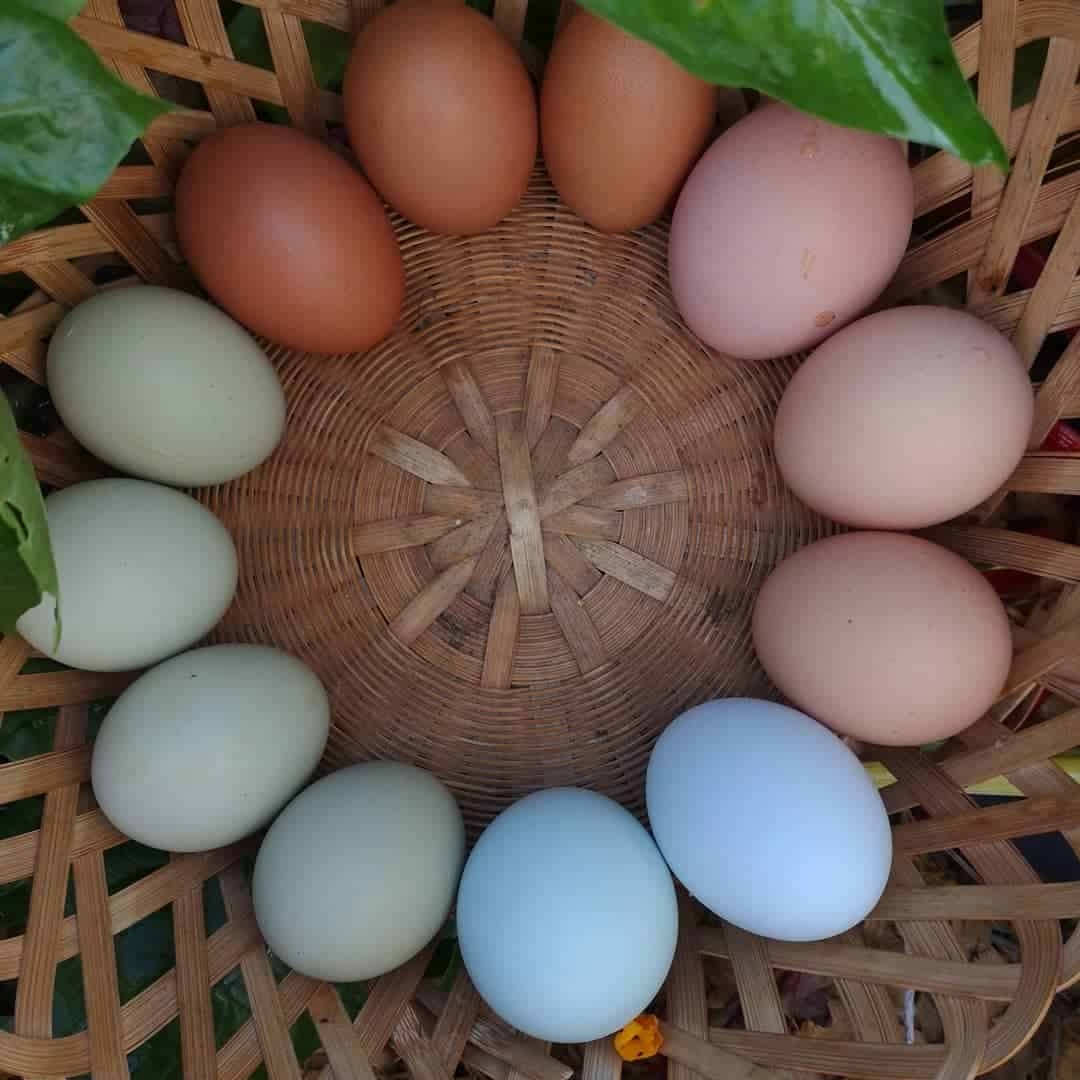
You can get a rainbow of different colored eggs, it depends on the breed of chicken. Some will lay dark brown, light brown, red burgundy, pink, olive, blue, etc and they’re beautiful. It also doesn’t change, a hen will only lay one kind of colored egg. With our current hens we have some olive green, blue and pink hues.
That’s all I have for you nowI hope you enjoyed.
I wanted to share a few fun (and some not fun) facts about these animals.
1.
Chickens are omnivores, they eat plants, seeds, small animals and in some unfortunate cases they’ll take part in cannibalism. We’ve only dealt with cannibalism with one hen before in the past, she would constantly eat any eggs laid. It usually starts by accident, a chicken accidentally breaks the shell and because they’re naturally curious they check it out and sometimes when they taste it once they continuously do it. Cannibalism can also happen after a member of the flock is injured and has an opened wound, other members will peck and at times continue to peck until they’ve killed the other chicken. It’s why you need to separate injured chickens from the main flock.
2.
They can eat a lot of seasonings you use in your cooking. A lot is extremely beneficial, some herbs act as a natural dewormer, sprinkle certain herbs in the coop it helps keeps it pest free and relaxes your chickens, some herbs help with inflammatory issues, sinus issues and so on. They can even eat red pepper flakes, it helps with worms and helps fight bacteria.
3.
They love their baths (dust baths of course) and its one of the cutest things
Dust baths are a sign of happy chickens, it looks messy but it actually helps keep them parasite free. You should never give a chicken a real bath (water bath) unless they happen to roll in something dangerous, or have a very poopy booty
which is always fun. And if you do give them a bath they need to be dried and in a warm area until completely dry.4.
The pecking order is always interesting to me, in every flock you’ll always have one “head chicken” she or he will put the others in their place with some quick pecks and maybe chasing them away from a treat. In our flock its our second oldest hen and when she puts the others in their place it’s actually very gentle, I’ve never seen her be aggressive while doing it. You’ll then have some that are in the middle and those chickens can usually be more relaxed than others because they just have a comfortable place in the chicken hierarchy, its the ones at the bottom that are more alert. Our two that are at the bottom of the pecking order is Velvet and Millie, they don’t necessarily get bullied but it just means they’ll get last pickings when it comes to treats and will just be pecked more than the others.
5.
Did you know that there’s a 4ft chicken breed?
It’s called Indio Gigante. Roosters can reach almost 4 ft tall and hens are typically close to 3ft.
I think they’re a little creepy lookin’ ngl
Idk if I would ever want one, at least not a rooster because I wouldn’t want to risk a mean 4ft chicken. Our current roosters already cause enough trouble I can’t imagine the struggle with a mean one of these.6.
You can get a rainbow of different colored eggs, it depends on the breed of chicken. Some will lay dark brown, light brown, red burgundy, pink, olive, blue, etc and they’re beautiful
. It also doesn’t change, a hen will only lay one kind of colored egg. With our current hens we have some olive green, blue and pink hues.That’s all I have for you now
I hope you enjoyed.

![Super M [Ahsoka]](https://kpopsource.com/data/medal/1218_1600222072m.jpg)
![Rose Competition [Vikki]](https://kpopsource.com/data/medal/581_1610996728m.jpg)
![SHINee [Ahsoka]](https://kpopsource.com/data/medal/2238_1710820634m.jpg)
![STAR WARS EVENT [VIKKI]](https://kpopsource.com/data/medal/1166_1610996719m.jpg)


![Donation [Boyo]](https://kpopsource.com/data/medal/2390_1728246881m.jpg)

![Donation [Boyo]](https://kpopsource.com/data/medal/2391_1728247541m.jpg)
![V [Boyo]](https://kpopsource.com/data/medal/2389_1728246822m.jpg)

![Win Metawin [Boyo]](https://kpopsource.com/data/medal/2308_1719261902m.jpg)
![Pavel Phoom [Hakunama_Tata]](https://kpopsource.com/data/medal/2215_1705784236m.jpg)