
- Joined
- 1 May 2022
- Messages
- 9,562
- Reactions Received
- 11,209
- Location
- Planet Earth
- Cards
- View Profile
- KS Coins
- 13,938
- Fandom
- Ujung
- Gender
- Female
- Pronouns
- She/Her


I am. As Leeseo wisely said, "I walk slowly but I never walk backwards. "You seem proud that you can offer up some wisdom


![Super M [Ahsoka]](https://kpopsource.com/data/medal/1218_1600222072m.jpg)
![Rose Competition [Vikki]](https://kpopsource.com/data/medal/581_1610996728m.jpg)
![SHINee [Ahsoka]](https://kpopsource.com/data/medal/2238_1710820634m.jpg)
![STAR WARS EVENT [VIKKI]](https://kpopsource.com/data/medal/1166_1610996719m.jpg)


you should make this a requirement whenever new people sign up lolIf you have two tetrahedrons (a figure made of 4 triangular sides) that have only equilateral triangles, what would be the angle of the planes between sides of the triangle?
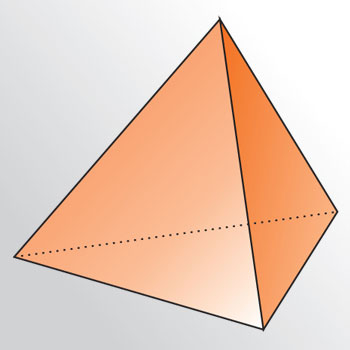
I'll go for this if all members are required to have non default kpop esthetics.you should make this a requirement whenever new people sign up lol
Sounds totally fair.no thanks passI'll go for this if all members are required to have non default kpop esthetics.
No wonder you keep losing all your court battles. Threaten you with esthetics and you fold instantly.no thanks pass
aesthetic battles yesNo wonder you keep losing all your court battles. Threaten you with esthetics and you fold instantly.


Ill send this to mensa to show them i am indeed smart and gifted in mathematics. Theyll be so ashamed after they gave me 74 IQ in their testCorrect
My guess is 60 degrees, but I have a good feeling it's wrong (Geometry was never my strong suit).
60? the only good thing about geometry for me was the hot teacher lol
If anyone is curious, the answer is 70.5 degrees (approximately). I’ll put the chatGPT explanation of an edge angle vs dihedral angle below, because most people likely are thinking of it as an edge angle situation.

 luckytoilet.wordpress.com


![KS Arcade [Treasure_Starz]](https://kpopsource.com/data/medal/2265_1714144904m.jpg)
![Journey into the Enchanted Forest [Harmony_Starz]](https://kpopsource.com/data/medal/2336_1723482107m.jpg)

me too, I forgot all my math

![Have You Met [ani07]](https://kpopsource.com/data/medal/1971_1694870476m.jpg)
![KS Arcade [ani07]](https://kpopsource.com/data/medal/2255_1712538480m.jpg)
![Have You Met [ani07]](https://kpopsource.com/data/medal/1956_1686740271m.jpg)
![Journey into the Enchanted Forest [ani07]](https://kpopsource.com/data/medal/2341_1723525092m.jpg)
![Have You Met [ani07]](https://kpopsource.com/data/medal/2506_1744231478m.jpg)
![Have You Met? [ani07]](https://kpopsource.com/data/medal/2626_1770415830m.jpg)
![BossNoeul [ani07]](https://kpopsource.com/data/medal/2534_1748191912m.jpg)
![Have You Met? [ani07]](https://kpopsource.com/data/medal/2537_1748885676m.jpg)