Give me a language…. (1 Viewer)
- Thread starter Ahsoka
- Start date
- Replies 41
- Views 872
![Xdinary Heroes [shinku]](https://kpopsource.com/data/medal/2287_1718413093m.jpg)

![Have You Met [ilychan]](https://kpopsource.com/data/medal/1940_1730823703m.jpg)

- Joined
- 14 October 2019
- Messages
- 25,586
- Reactions Received
- 43,656
- Website
- infiniteorbit.carrd.co
- Cards
- View Profile
- KS Coins
- 40,330
- Fandom
- Orbit
- Gender
- Female
- Pronouns
- she/her


- Joined
- 27 August 2018
- Messages
- 71,374
- Reactions Received
- 151,377
- Cards
- View Profile
- KS Coins
- 129,585
- Fandom
- Lex stan
- Gender
- Female
- Pronouns
- she/her
- Ship
- Wreck

![Super M [Ahsoka]](https://kpopsource.com/data/medal/1218_1600222072m.jpg)
![Rose Competition [Vikki]](https://kpopsource.com/data/medal/581_1610996728m.jpg)
![SHINee [Ahsoka]](https://kpopsource.com/data/medal/2238_1710820634m.jpg)
![STAR WARS EVENT [VIKKI]](https://kpopsource.com/data/medal/1166_1610996719m.jpg)


There is an unexpected French word that is thought to come straight from German “Was ist das?”/“What is that”. It refers to a small window found above some doors, called a transom window, or “vasistas” in French. It’s believed that this dates back to the Franco-Prussian war, and that the Germans were unfamiliar such windows. The French didn’t know this and thought it was the German name, and adopted the name for their own language.German
- Joined
- 27 August 2018
- Messages
- 71,374
- Reactions Received
- 151,377
- Cards
- View Profile
- KS Coins
- 129,585
- Fandom
- Lex stan
- Gender
- Female
- Pronouns
- she/her
- Ship
- Wreck
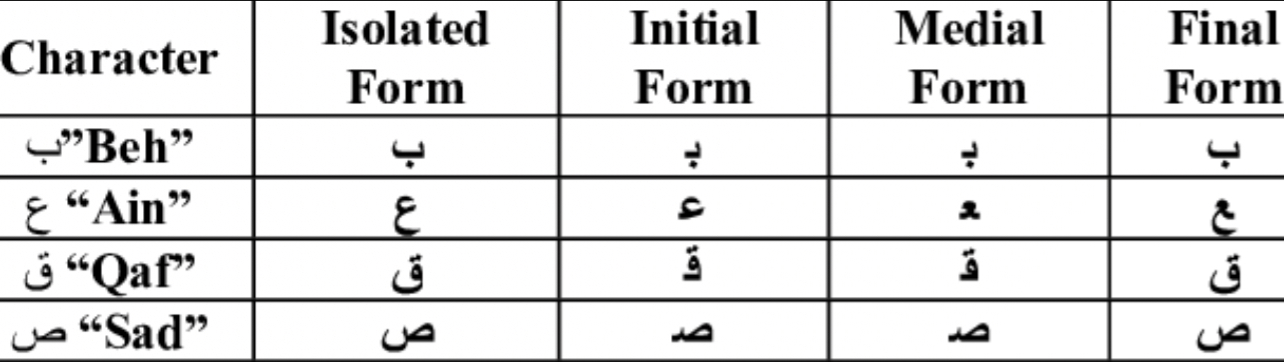
Letters in Urdu can have 4 different forms depending on the letters position in the alphabet. There’s a form for the letter on its own, the letter at the start of a word, the letter in the middle of a word, and the letter at the end of the wordurdu
 This is a few letters in their 4 forms
- Joined
- 27 August 2018
- Messages
- 71,374
- Reactions Received
- 151,377
- Cards
- View Profile
- KS Coins
- 129,585
- Fandom
- Lex stan
- Gender
- Female
- Pronouns
- she/her
- Ship
- Wreck
I’m glad you posted because Polish was actually what inspired me to make this threadpolish! i'm curious to see if there is anything fun about a language coming from that trainwreck of a country
Some people who learn Polish as a second language wonder why the letter Ł / ł in Polish makes a w sound (in English) while looking so much like a Latin L. The reasons that’s the case is because the letter actually did used to make an L sound. Specifically what’s called a dark L, found in English words like call. Over time, this pronunciation began to shift into more of a W sound (again, in English). While this change may seem odd, it’s actually a very natural shift as both are what is called an approximate, which is a type of sound produced with little constriction in the vocal tract. And English has examples of a shift from an L sound to W also. In some dialects, you may go to the store to grab some “miwk(milk) and sawt(salt)”, complaining about “aw(all) the errands” you have to do.

- Joined
- 12 September 2020
- Messages
- 40,036
- Reactions Received
- 46,687
- Location
- irritating the metalheads
- Website
- www.tumblr.com
- Cards
- View Profile
- KS Coins
- 179,519
- Fandom
- mainly bg
- Gender
- Female
- Pronouns
- she/her
- Ship
- Wreck


interesting!There is an unexpected French word that is thought to come straight from German “Was ist das?”/“What is that”. It refers to a small window found above some doors, called a transom window, or “vasistas” in French. It’s believed that this dates back to the Franco-Prussian war, and that the Germans were unfamiliar such windows. The French didn’t know this and thought it was the German name, and adopted the name for their own language.

- Joined
- 20 November 2018
- Messages
- 43,155
- Reactions Received
- 75,273
- Location
- In the OCEAN
- Cards
- View Profile
- KS Coins
- 141,271
- Pronouns
- Fish/Mermaid
- Ship

![Lee Hi [Nina]](https://kpopsource.com/data/medal/2361_1724713914m.jpg)
![KS Arcade [Nina]](https://kpopsource.com/data/medal/2253_1715907491m.jpg)


![I.M [Nina]](https://kpopsource.com/data/medal/2455_1735231784m.jpg)


- Joined
- 12 September 2020
- Messages
- 40,036
- Reactions Received
- 46,687
- Location
- irritating the metalheads
- Website
- www.tumblr.com
- Cards
- View Profile
- KS Coins
- 179,519
- Fandom
- mainly bg
- Gender
- Female
- Pronouns
- she/her
- Ship
- Wreck
wow! I always wondered why it's pronounced W and not L lolI’m glad you posted because Polish was actually what inspired me to make this thread
Some people who learn Polish as a second language wonder why the letter Ł / ł in Polish makes a w sound (in English) while looking so much like a Latin L. The reasons that’s the case is because the letter actually did used to make an L sound. Specifically what’s called a dark L, found in English words like call. Over time, this pronunciation began to shift into more of a W sound (again, in English). While this change may seem odd, it’s actually a very natural shift as both are what is called an approximate, which is a type of sound produced with little constriction in the vocal tract. And English has examples of a shift from an L sound to W also. In some dialects, you may go to the store to grab some “miwk(milk) and sawt(salt)”, complaining about “aw(all) the errands” you have to do.
- Joined
- 12 September 2020
- Messages
- 40,036
- Reactions Received
- 46,687
- Location
- irritating the metalheads
- Website
- www.tumblr.com
- Cards
- View Profile
- KS Coins
- 179,519
- Fandom
- mainly bg
- Gender
- Female
- Pronouns
- she/her
- Ship
- Wreck
- Joined
- 27 August 2018
- Messages
- 71,374
- Reactions Received
- 151,377
- Cards
- View Profile
- KS Coins
- 129,585
- Fandom
- Lex stan
- Gender
- Female
- Pronouns
- she/her
- Ship
- Wreck
French was the first official language of the Olympics, and currently is one of two permanent official languages (the other being English). The language of the host country is typically the third (unless the country speaks French or English), but they do not get permanent official language status.French
- Joined
- 27 August 2018
- Messages
- 71,374
- Reactions Received
- 151,377
- Cards
- View Profile
- KS Coins
- 129,585
- Fandom
- Lex stan
- Gender
- Female
- Pronouns
- she/her
- Ship
- Wreck
The inverted question and exclamation marks in Spanish (¿ and ¡) are extremely rare. Generally, they’re only found in Spanish and some minority languages spoken in Spain (like Galician)do Spanish next!

- Joined
- 10 September 2019
- Messages
- 61,900
- Reactions Received
- 52,474
- Location
- Europe and Asia
- Website
- www.ancestry.com
- Cards
- View Profile
- KS Coins
- 200,255
- Fandom
- 𝔹𝕃𝕀ℕ𝕂
- Gender
- Male
- Pronouns
- Eurasian


interesting thanksSpaces in Thai don’t separate words. They separate sentences and clauses. Thai also has simpler grammar, as it has no declension (ex. he becoming him or his), doesn’t require one to conjugate verbs, doesn’t require subject verb agreement, is not gendered, and doesn’t modify words to become plural.
- Joined
- 20 November 2018
- Messages
- 43,155
- Reactions Received
- 75,273
- Location
- In the OCEAN
- Cards
- View Profile
- KS Coins
- 141,271
- Pronouns
- Fish/Mermaid
- Ship
An upside down question mark is too much work. And yet the Spanish teachers insisted we use them.The inverted question and exclamation marks in Spanish (¿ and ¡) are extremely rare. Generally, they’re only found in Spanish and some minority languages spoken in Spain (like Galician)

- Joined
- 2 March 2021
- Messages
- 23,293
- Reactions Received
- 28,162
- Cards
- View Profile
- KS Coins
- 4,421
- Fandom
- Villain
- Ship
this is what makes me mad about my language lolLetters in Urdu can have 4 different forms depending on the letters position in the alphabet. There’s a form for the letter on its own, the letter at the start of a word, the letter in the middle of a word, and the letter at the end of the word
- Joined
- 27 August 2018
- Messages
- 71,374
- Reactions Received
- 151,377
- Cards
- View Profile
- KS Coins
- 129,585
- Fandom
- Lex stan
- Gender
- Female
- Pronouns
- she/her
- Ship
- Wreck
One of the reasons Classical Chinese literature can flow better in Cantonese than in Mandarin is because Cantonese retains certain final letter sounds from Middle Chinese that Mandarin has dropped, which affects the rhyme scheme. One example is the difference between heart (心) and new (新) in Cantonese and Mandarin. In Cantonese they do not rhyme, but in Mandarin they do because the old ending difference no longer exists.Cantonese

- Joined
- 19 January 2020
- Messages
- 14,137
- Reactions Received
- 18,909
- Location
- My house
- Cards
- View Profile
- KS Coins
- 7,612
- Fandom
- 🐀🐂🍜🧸🎮
- Gender
- Male
- Ship


- Joined
- 27 August 2018
- Messages
- 71,374
- Reactions Received
- 151,377
- Cards
- View Profile
- KS Coins
- 129,585
- Fandom
- Lex stan
- Gender
- Female
- Pronouns
- she/her
- Ship
- Wreck
I’ll give you twoFinnish, even if its my first language i struggle with its history and rules so theres a great chance i dont know the fact but lets see if you manage to give one i dont know
1. Finnish was a big inspiration for Tolkien’s Elvish language Quenya, particularly in phonology and structure. He thought Finnish sounded magical, which is why he used it for elves, though at the same time he made it very distinct.
2. The oldest known document from a Finnic language is from the 13 century, and written on bark. The document is thought to be a magic spell.
- Joined
- 14 October 2019
- Messages
- 25,586
- Reactions Received
- 43,656
- Website
- infiniteorbit.carrd.co
- Cards
- View Profile
- KS Coins
- 40,330
- Fandom
- Orbit
- Gender
- Female
- Pronouns
- she/her
my thoughts and prayers go out to them in these hard timesI’m glad you posted because Polish was actually what inspired me to make this thread
Some people who learn Polish as a second language wonder why the letter Ł / ł in Polish makes a w sound (in English) while looking so much like a Latin L. The reasons that’s the case is because the letter actually did used to make an L sound. Specifically what’s called a dark L, found in English words like call. Over time, this pronunciation began to shift into more of a W sound (again, in English). While this change may seem odd, it’s actually a very natural shift as both are what is called an approximate, which is a type of sound produced with little constriction in the vocal tract. And English has examples of a shift from an L sound to W also. In some dialects, you may go to the store to grab some “miwk(milk) and sawt(salt)”, complaining about “aw(all) the errands” you have to do.
- Joined
- 10 September 2019
- Messages
- 61,900
- Reactions Received
- 52,474
- Location
- Europe and Asia
- Website
- www.ancestry.com
- Cards
- View Profile
- KS Coins
- 200,255
- Fandom
- 𝔹𝕃𝕀ℕ𝕂
- Gender
- Male
- Pronouns
- Eurasian
Viewing thread
Total: 1 (members: 0, guests: 1)