- Joined
- 27 August 2018
- Messages
- 71,387
- Reactions Received
- 151,400
- Cards
- View Profile
- KS Coins
- 129,595
- Fandom
- Lex stan
- Gender
- Female
- Pronouns
- she/her
- Ship
- Wreck

![Super M [Ahsoka]](https://kpopsource.com/data/medal/1218_1600222072m.jpg)
![Rose Competition [Vikki]](https://kpopsource.com/data/medal/581_1610996728m.jpg)
![SHINee [Ahsoka]](https://kpopsource.com/data/medal/2238_1710820634m.jpg)
![STAR WARS EVENT [VIKKI]](https://kpopsource.com/data/medal/1166_1610996719m.jpg)


I did a thread about how the name for the orange (fruit) came to be in the main European languages. If I make any mistakes feel free to let me know. This time, I’ll be talking about the root for the color orange in relation to the name of the fruit. Also as a heads up, if a language has multiple ways of saying the fruit and/or color and one of them has the same root as the other, I’ll be counting it as a language where the color and fruit name have the same root, even though there’s also a non match option. Countries not colored in don’t necessarily have their own language as their main spoken language so it would depend on the language/dialect the individual speaks.
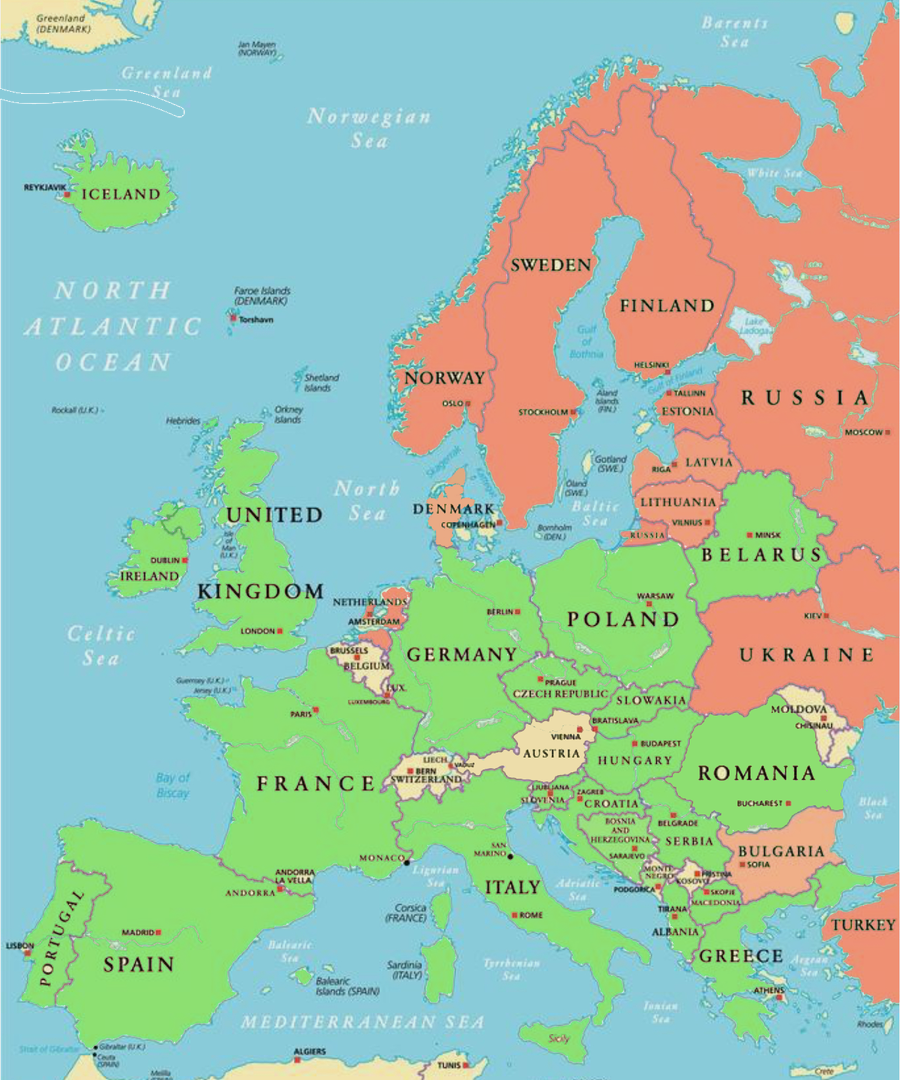
Here’s a map of the countries in Europe based on if the language has a shared root between the color and fruit. Red countries have no shared root between color/fruit, green do have a shared root. You can definitely see a pattern. More northern countries (Nordic minus Iceland, Baltics, Ukraine and Russia) tend to get the fruit name from the Dutch word for orange (appelsien) and the color name from an originally Latin source. Oftentimes this can also show attitudes towards the naming of colors. The reason so many countries share the name of the color and fruit is because they didn’t have a name for the color before the orange fruit became more popular, and as such they named the color after the fruit. Before, they would often call the color “red yellow” or something like that. Countries that don’t have the same root for the color and fruit oftentimes adopted the name for the fruit and color at different times, usually adopting the color a good chunk of time later from another source.
Here’s a map of the countries in Europe based on if the language has a shared root between the color and fruit. Red countries have no shared root between color/fruit, green do have a shared root. You can definitely see a pattern. More northern countries (Nordic minus Iceland, Baltics, Ukraine and Russia) tend to get the fruit name from the Dutch word for orange (appelsien) and the color name from an originally Latin source. Oftentimes this can also show attitudes towards the naming of colors. The reason so many countries share the name of the color and fruit is because they didn’t have a name for the color before the orange fruit became more popular, and as such they named the color after the fruit. Before, they would often call the color “red yellow” or something like that. Countries that don’t have the same root for the color and fruit oftentimes adopted the name for the fruit and color at different times, usually adopting the color a good chunk of time later from another source.